Transforming Lives Through Chickens
Meta description: Discover how HDNF’s chicken breeding and distribution programs strengthen food security, create livelihoods, and build a self-reliant Haiti through local training and community ownership.
A simple yet powerful poultry initiative is changing lives in Haiti.
This article has been corrected. A previous version conflated two related programs in two different locations. The SOHADERK Chicken Breeding and Egg Production Project documented a production and agricultural training center in Kenscoff, Haiti, while a separate Seed Haiti/HDNF chicken distribution program served 100 families in Northwest Haiti.
The Chicken Breeding and Egg Production Program gives families and local farmers more than chickens. It provides a renewable source of food, income, fertilizer, and opportunity. Through breeding, training, vaccination, coop construction, and local business development, the program turns poultry into a practical foundation for stronger households.
This is not a one-time handout.
It is a system designed to keep producing.
The Haitian Development Network Foundation (HDNF) supports long-term development through its food security work in Haiti. Our goal is clear: help communities move from emergency relief toward lasting self-reliance through locally owned solutions.
Chickens Create More Than Food
A chicken is a small asset. In the right environment, it can become much more.
Families can use eggs and meat to improve nutrition. They can sell surplus eggs, chicks, or mature birds to earn income. Chicken manure can be transformed into compost for gardens and fields. Training helps families protect the flock, manage production, and build a small enterprise that can grow over time.
One flock can support several needs at once:
- Nutrition through eggs and poultry meat
- Income through local sales
- Agricultural productivity through compost
- Local capacity through training and veterinary care
- Community growth through breeding and pay-it-forward distribution
Emergency relief saves lives today. Generational transformation saves generations.
That is the difference between distributing food for a moment and helping families produce food for the future.
A Haitian Tradition With New Possibilities
Family poultry has long been part of rural life in Haiti. Independent research from the Food and Agriculture Organization has described family poultry, primarily chickens, as a major livestock activity among rural households. Traditional chickens are often raised around the home, using locally available feed and low-cost management practices.
This history matters.
Haitian families already possess knowledge about raising animals in challenging conditions. The role of a development program is not to replace that knowledge. It is to strengthen it with practical tools, reliable veterinary support, improved shelter, training, and access to breeding stock.
Haiti’s agricultural history also shows why local production is so important. After the country’s traditional pig population was devastated in the early 1980s, poultry became increasingly important as a source of animal protein. Haiti later developed a commercial poultry sector, but imports and economic disruptions weakened local production. Small household flocks remained essential because they were accessible to families with limited land and resources.
Today, the opportunity is not to return to the past. It is to build on Haiti’s existing agricultural knowledge and connect it to stronger systems.
Local knowledge. Practical science. Community ownership.
What Donors Made Possible
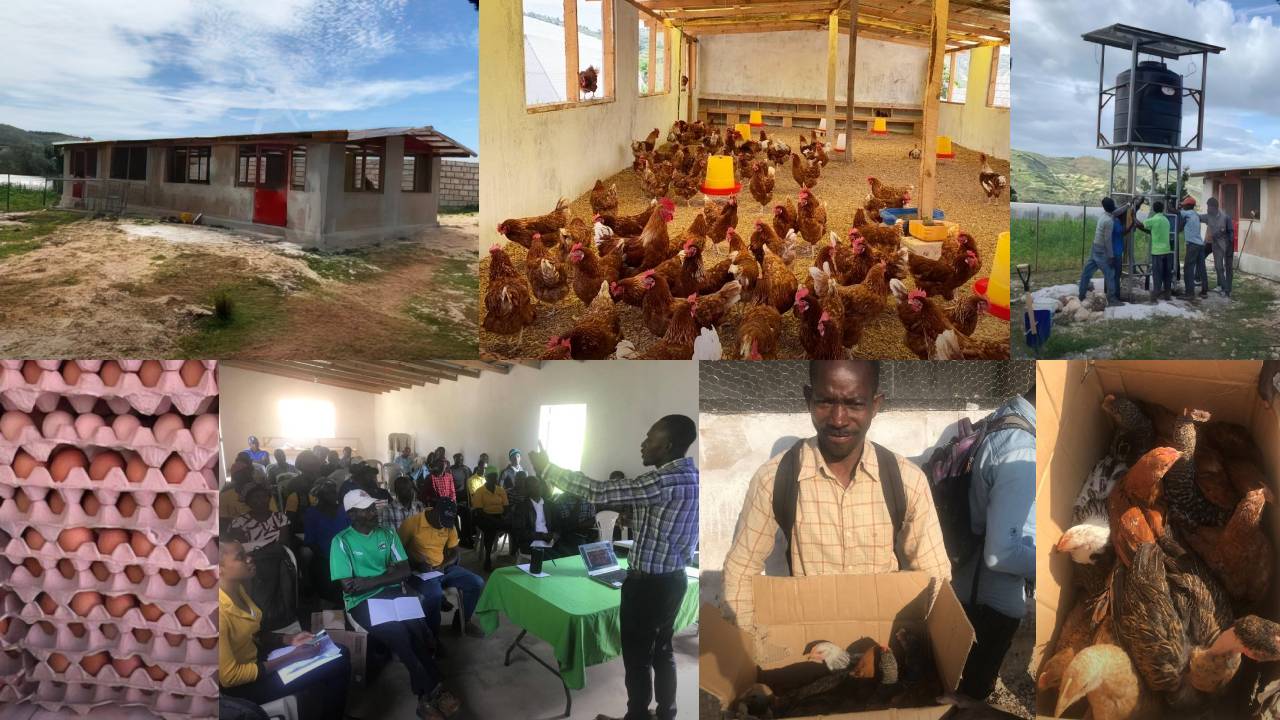
HDNF’s January 6, 2024 report on the SOHADERK Chicken Breeding and Egg Production Project documents a production and agricultural training center in Kenscoff, Haiti.
The SOHADERK project in Kenscoff included:
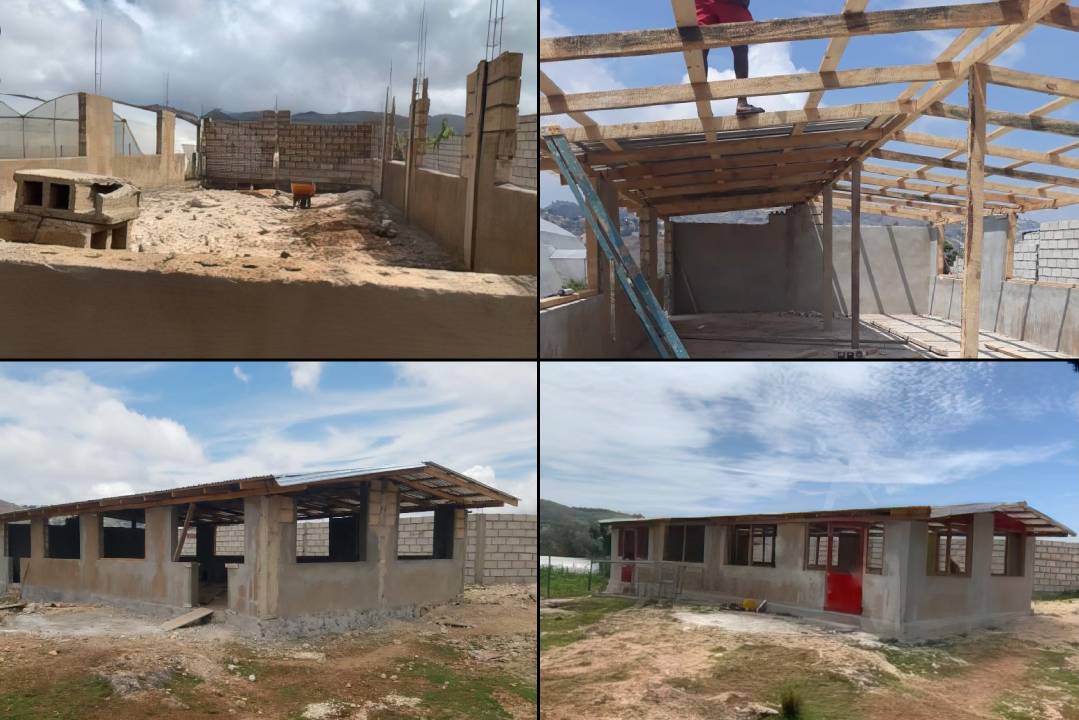
- An 839-square-foot poultry house
- A 1,500-watt solar energy system
- A dedicated water supply
- 100 breeding hens and roosters
- Incubators for producing new chicks
- Training for local farmers
- Composting from poultry waste
The project reported that eggs were sold into the local market while additional eggs were placed in incubators. The result was a working local production cycle in Kenscoff: hens produced eggs, incubators produced chicks, farmers received training and birds, and poultry waste supported crop production.
Key Results From the Breeding Project
The SOHADERK project report records the following results for its cited reporting period in Kenscoff:
- 16,470 eggs produced
- 1,094 chicks hatched
- 50 local farmers trained
- 50 new chicken and egg farms created
- 500 chickens distributed to beneficiaries
- 575 cubic feet of compost produced
- 85 eggs produced per day during the reported production period
- 13,530 eggs sold through more than 451 egg cartons
These numbers reflect the SOHADERK breeding and training center in Kenscoff, not the separate Northwest Haiti distribution program. They represent more than output. They represent multiplication.
Eggs become chicks. Chicks become flocks. Flocks become household businesses. Manure becomes compost. Training becomes local expertise.
The program report also describes young people taking up poultry farming as a viable business and schools and community groups visiting the site to learn poultry-raising techniques.
A productive flock becomes a community resource.
A Separate 100-Family Distribution Program
HDNF also funded a related but separate 2023 chicken distribution program, implemented by Seed Haiti in Northwest Haiti.
This program served 100 families across 50 farms. Families received a breeding pair, one rooster and one hen, along with support that included:
- Feed
- Vaccinations
- Veterinary follow-up
- A simple coop
- Poultry training
The distribution program reported:
- 200 chickens distributed
- 96 coops constructed
- 100% of distributed chickens vaccinated
- One veterinarian engaged to provide care and training
- 47 hens laying eggs during the early reporting period
- Approximately 10 eggs per laying hen on average
The program intentionally included vulnerable participants, including 20 widows, 13 elderly people, three people with disabilities, and two blind participants.
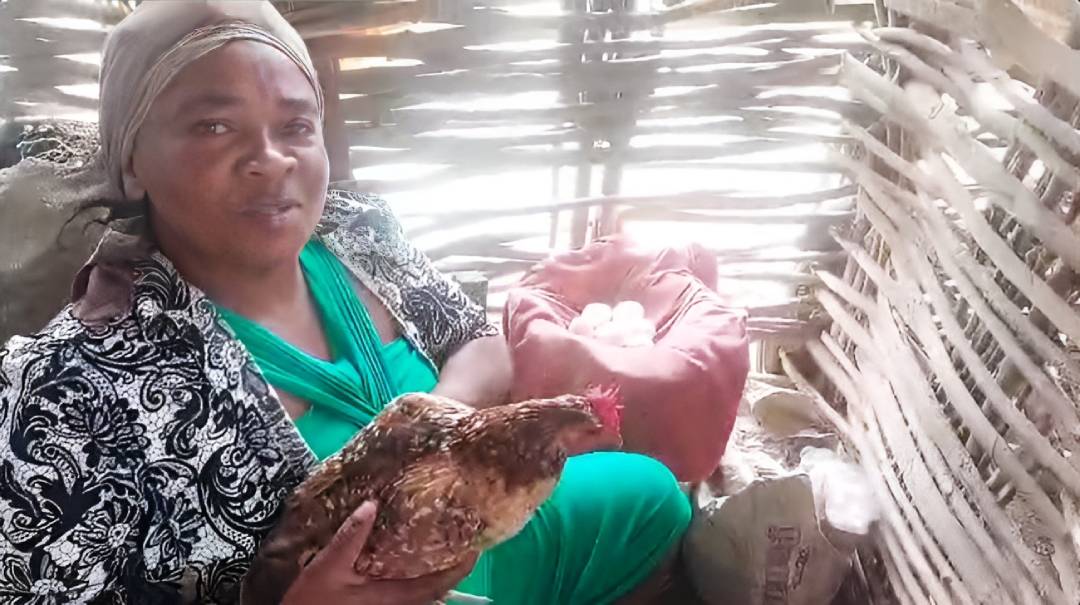
This was community-centered development in practice. Families were not treated as passive recipients. They became poultry owners, caretakers, producers, and future partners.
The program also used a pay-it-forward model. Families were expected to return a rooster and a hen so another household could begin. The first household receives an opportunity. The next household receives one because the first family helps extend it.
That is how local systems grow.
Why Food Security in Haiti Requires Long-Term Investment
HDNF’s food security work responds to a serious reality: millions of people in Haiti face inconsistent access to nutritious food. Hunger affects children, older adults, people with disabilities, and entire communities.
But food insecurity is not solved by food distribution alone.
Relief is urgent. It is also temporary.
Lasting food security requires productive households, local supply chains, agricultural skills, animal health services, and income opportunities. Poultry supports all of these areas at once.
These two poultry efforts also reflect HDNF’s broader Haiti 2050 vision. The SOHADERK production center in Kenscoff advances the Food Production pillar directly by expanding local access to eggs, meat, and breeding stock, and it supports Energy Independence through the solar-powered production site. The separate Seed Haiti distribution program in Northwest Haiti strengthens household-level food access and local economic inclusion. Together, they connect with HDNF’s wider work in preservation, agriculture, and community resilience.
The model is integrated because the challenge is integrated.
Food, energy, skills, and livelihoods must grow together.
Your Donation Can Help Expand the Model
HDNF project reports show what a focused investment can make possible: infrastructure, birds, feed, veterinary care, training, incubation, and composting.
The 2023 distribution report estimated that approximately $112 per family covered a breeding pair, feed, vaccinations, a simple coop, and training at that time. Costs and program needs change, so donors should confirm current options and designations directly with HDNF.
Your donation can support the broader work required to expand sustainable development in Haiti, including:
- Poultry and livestock initiatives
- Farmer and entrepreneur training
- Veterinary and agricultural support
- Coops, feed, tools, and other productive inputs
- Food-security programs and community partnerships
- Monitoring, follow-up, and local capacity building
A donation does not simply purchase an item. It enters an organized process designed to strengthen households and communities.
Please confirm current program availability, donation designations, and funding options with HDNF before giving. Individual donations do not guarantee a specific beneficiary or outcome, but every contribution can strengthen the systems that make lasting progress possible.
Volunteer Alongside Communities
Financial support is important. Skilled participation matters too.
HDNF matches volunteer placements to current program needs. Opportunities may include farmer training, post-harvest management, community food security, logistics, outreach, agronomy, project management, monitoring and evaluation, and health and nutrition.
Volunteers should understand that placements are not designed as tourism experiences. They involve working respectfully alongside HDNF staff and community partners. The purpose is to contribute useful time and skills to programs already in motion.
A volunteer placement may not include a visit to this specific chicken project. Current opportunities, travel conditions, placement requirements, and program status must be confirmed with HDNF.
If you are interested, submit an inquiry through HDNF’s volunteer and support page or contact the organization at info@hdn.org.
Come with humility. Come prepared to listen. Come ready to contribute.
Join Us in Building a Self-Reliant Haiti
The Chicken Breeding and Egg Production Program demonstrates what becomes possible when a community receives tools that continue working after the initial project ends.
A hen produces eggs. Eggs produce chicks. Chicks expand local farms. Farms create income. Compost strengthens agriculture. Training builds confidence and capability.
This is how transformation takes root.
The need remains urgent, and many families still face food scarcity. But the path forward is visible. With trusted local partnerships, practical investment, and sustained commitment, more communities can build reliable sources of nutrition and income.
Join us in creating a self-reliant Haiti.
Donate to strengthen long-term food security.
Volunteer by offering your skills and time.
Share this article so more people can participate in Haiti’s future.
Your contribution makes a tangible difference: not only today, but for the generations that follow.
Sources and Methodology
Published: August 30, 2026
Author: Penny, HDNF Blog Writer
Editorial reviewer: HDNF Communications
This article is based primarily on HDNF project reports and program pages:
- Chicken Breeding Project Providing Food for the Haitian People, HDNF report dated January 6, 2024, describing the SOHADERK production and agricultural training center in Kenscoff, Haiti
- Chicken Distribution Project Improves Food Access for Haitians, HDNF report on the 2023 Seed Haiti distribution program in Northwest Haiti
- Haiti Food Security Programs
- Many Ways to Support Haiti’s Development
This article was revised to correct an earlier conflation of these two locations and programs. References to 16,470 eggs, 1,094 chicks, 50 trained farmers, 50 new farms, 500 chickens, the poultry house, the solar system, the water supply, and compost production refer to the SOHADERK project in Kenscoff, not to the Northwest Haiti distribution program.
Historical context regarding family poultry and Haiti’s agricultural development was checked against independent sources, including:
- FAO: Family poultry production in Haiti
- Haiti poultry sector research and agricultural studies
- Pulitzer Center reporting on Haiti’s poultry industry
Project figures are reported by HDNF and reflect the cited project periods. Unless otherwise stated, infrastructure, production, training-center, and compost figures in this article refer to the SOHADERK project in Kenscoff, while the 100-family distribution figures refer to the separate Seed Haiti program in Northwest Haiti. Current program availability, volunteer placements, beneficiary numbers, project status, costs, and donation designations should be confirmed with HDNF.
Educational and informational disclaimer: This article is provided for general educational and informational purposes only. It is not financial, investment, tax, legal, medical, or professional advice. Donors and volunteers should make decisions based on current information and consult qualified advisers when appropriate.
Political disclaimer: HDNF does not endorse or oppose any political candidate or political party.